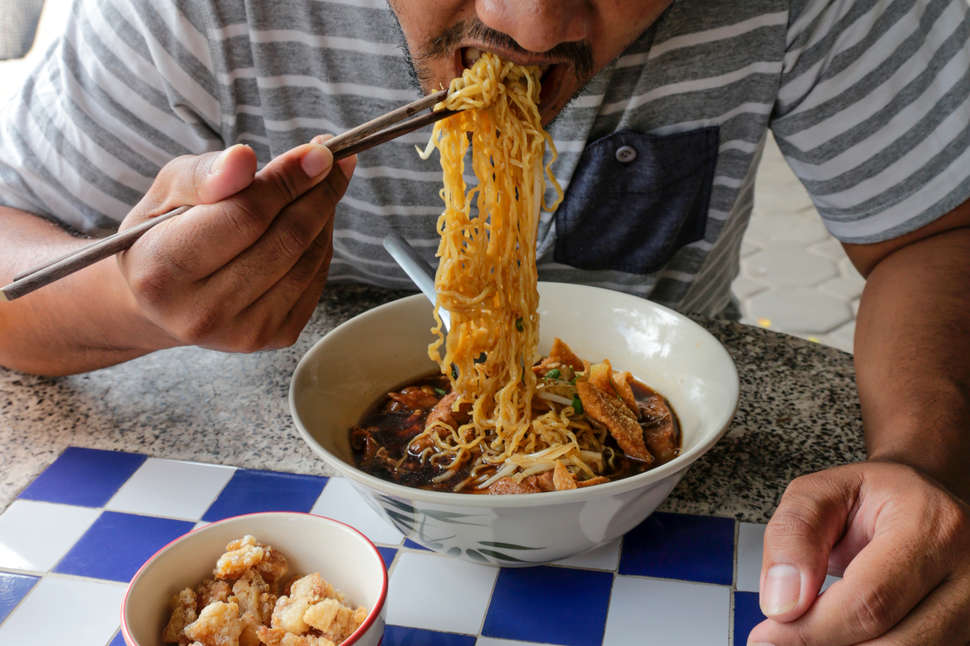
Noodles, except for zoodles (it would be ideal if you leave), are the apparently the ideal sustenance. This splendid sustenance variety, which incorporates everything from rigatoni to udon, banh pho to spaetzle, appears to have unlimited stages to gulp, twirl, and panfry. Hardly any nations know the delight of noodles superior to China, where the foodstuff spread, advanced, and turned into a necessary piece of its culinary history for more than 4,000 years.
China isn't a stone monument nor are its noodles. In southern China, rice controls the perch. There, rice flour-based formulas create bouncy and sticky items that drench up sauce like a wipe. (Through hundreds of years of movement, colonization, and exchange, the strategies and dishes created in that piece of China saturated Southeast Asia, bringing forth provincial faves like pho, khao soi, and cushion see ew.) Head more distant inland in China and wheat rules. It shows as an energetically different exhibit of local breads, flapjacks, and, in particular, wheat and starch noodles.
To deal with everything for you, here's a breakdown of probably the most notable kinds of Chinese noodles - a considerable lot of which are served at cherished eateries around the nation - and our most loved approaches to eat them.
Otherwise called "rice vermicelli," these round and thin noodles are on the drier and chewier side, with their heartier shape making them ideal for blend fries and plates of mixed greens. In the United States, you'll regularly discover mai fun in a dish called Singapore noodles, wherein they're mix broiled with egg, shrimp, vegetables, and curry powder. You'll additionally discover these in a considerable measure of Vietnamese cooking, particularly in new bun servings of mixed greens and a flavorful soup called bun bo Hue.
Some may contend that these aren't noodles. To them, I'd state: Who harmed you? Depreciators aside, these rice cakes are produced using thick moves of beat glutinous rice that are steamed, at that point cut on an inclination into thin pieces. In case you're comfortable with Japanese mochi, you can presumably envision how nian gao functions. Filled in as a sweet dish in different parts of the nation, the Shanghainese variety is unmistakably appetizing. In mix singed chao nian gao, the delicate and chewy surface makes the ideal thwart to crunchy vegetables. At the market, you'll most likely locate the Korean variety, called tteok - those are fine for both Korean and Chinese formulas.
These noodles, made wide and decreased to amplify their similarity with sauces and flavors, are tricky and slurpable. Along these lines, they're broadly prominent in numerous Asian cooking styles, flying up in Thailand as cushion kee mao and in Vietnam as pho. Cantonese eateries frequently highlight it in chow fun, a mix seared dish with soy sauce, meat, and bean grows. To successfully panfry these sticky noodles and shield them from massing into a sticky bunch requires a very much oiled wok and a considerable amount of deftness - so perhaps abandon it to the specialists.
In the event that you spend your ends of the week creepin' on your neighborhood diminish whole parlor, you know these well. Cheung fun are pad delicate and jam like noodles that are made into sheets and frequently folded over a flavorful filling of shrimp, meat, or seared batter. Eating the diminish whole form is, by chance, a considerable measure like the sentiment of having a superbly warm towel laid all over. In Hong Kong, the noodles are served at road slows down in little rolls and finished with hoisin sauce, soy sauce, and sesame seeds. Their work of art, jiggly surface originates from a blend of rice flour and custard or glutinous rice flour, and the name makes an interpretation of actually to "digestive tract noodle" due to its stylish closeness to pig digestive system. You can steam these at home or purchase premade new noodles at some Asian merchants.
At the point when these thin egg-and-wheat noodles are crisp, they're phenomenal, with a particular springiness and heave that make them the ideal thwart to wontons. Some old-school wonton noodle shops in Hong Kong make a minor departure from these noodles, called "jook-sing noodles," by having a cook work the mixture by jumping on a goliath bamboo stalk. It's difficult to clarify, however it's cool to watch. Numerous Asian merchants offers these noodles new or solidified, however you can utilize the dried noodles after all other options have been exhausted. Simply ensure that whatever you purchase really contains egg - a few producers fudge it a bit and incorporate color to give the noodles that yolky yellow shade. These can be served in hot soup with wontons or blend singed in sauce. The standard bubbled variant of these are what individuals ordinarily use for chow mein: They can be tossed directly into the wok from their bundle.
When I was a child, these were the noodles that would quiets me down. I'd concentrate the majority of my vitality on slurping each strand, getting a charge out of each drop of the sauce that clung to them. These chewy noodles ordinarily have indistinguishable fixings from yao mein; in the diaspora, their fundamental distinctive point is that they're heftier. Lo mein is in it for the whole deal and plays well with rich sauces, overwhelming meats, and long spells at the smorgasbord table, a reality that has set it safely inside the Chinese takeout Greatest Hits Collection.
Yi mein are, similar to moment ramen, cooked and after that pan fried into a cake by their producers. They're costly a direct result of their fantastic fixings and relentless cooking process, so they're frequently brought out for festivities. You'll frequently discover these in a heavy, blend browned heap at Chinese feast corridors. At the point when braised in sauce, these noodles go up against a magnificently light surface, however it tends to be anything but difficult to overcook them until the point that they get spongy. In case you're influencing them at home, to make sure to undercook them by a couple of minutes when you at first bubble them before braising: 3-4 minutes will be okay.
On the off chance that you scan for these noodles, otherwise known as "cut noodles," on YouTube, set yourself up to be astonished. The making of these noodles is a specialized wonder, with cooks utilizing razor-like executes to quickly shave noodles off of a bit of mixture, shooting them straight into a pot of bubbling water to cook. Each group requires master timing: The cook needs to cut the noodles fast enough that the initial ones don't overcook. These incompletely formed strands are chewy, with a slurpability that makes them awesome with soups or braised meat. You'd likewise do well to combine these with Uyghur dishes like a generous sheep and-vegetable panfry.
The world cherishes these noodles, however a large number of us know them principally through their pre-cooked and southern style variety: moment ramen. To make these noodles the customary way, a batter produced using high-gluten flour is turned and extended by hand, with a few cooks making a show of slamming the strands into their work tables to shake off the overabundance flour. Through their developments, la mian creators practice power over the thickness of their noodles. Customarily, eateries will offer a decision between la mian and dao xiao mian for your soups. In Central Asia, these noodles are known as "laghman." One of the most surely understood emphasess is lanzhou la mian, a problem with embellished with new aromatics.
Newcomers may read the Anglicization of liangpi, "cool skin noodles," on a menu and envision getting a plateful of julienned bubbled pig skin, however these are really produced using wheat starch. The name was without a doubt enlivened by the noodles' wiggly surface. Through a to some degree laborious process, the starch is secluded from a flour-based mixture, steamed, at that point cut. It's a great deal of work, yet the noodles' interesting and flexible surface is so justified, despite all the trouble, particularly when served the conventional Shaanxi route with dark vinegar, stew oil, garlic, and cut cucumber.
Comments
Post a Comment