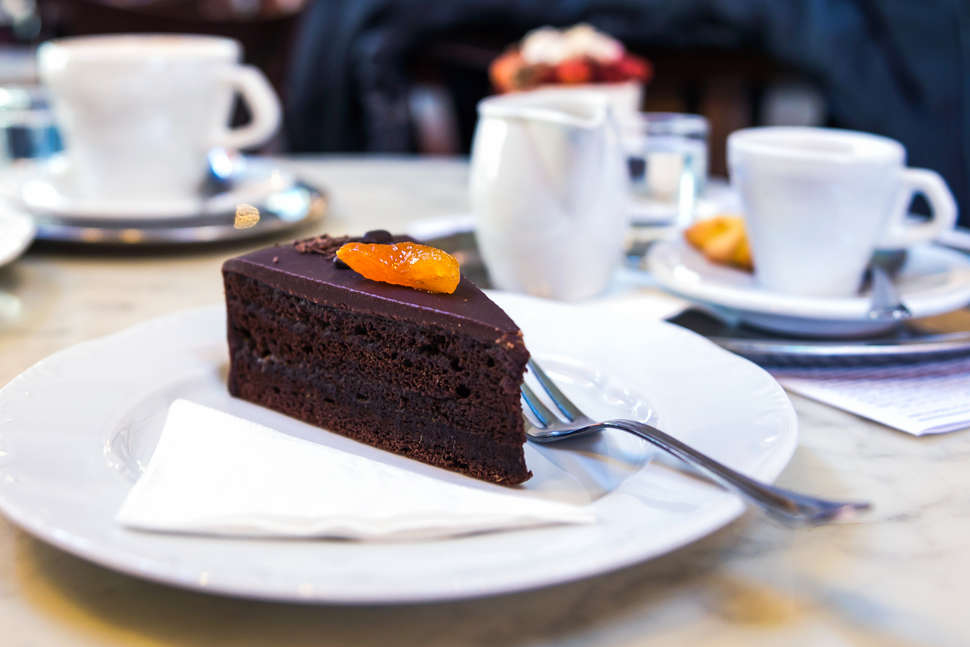
Baked goods are to Budapest as smoked meats are to Kansas City. Flavorful dishes like gulyás (goulash) and chicken paprikash may initially ring a bell when contemplating Hungarian food, however it's hard to meander the city's charmingly-spiked boulevards without detecting a cukrászda (bread shop/bistro) at regular intervals or something like that.
While Budapest's notoriety for being a mind blowing party city (from bars tucked inside destroyed structures to rowdy shower parties) reins incomparable, its daytime charms are a definitive following day lift me-up. Really, bistros have been at the center of Budapest's way of life for quite a long time. "Back in the turn of the century, which we consider the tallness of Hungarian café culture, Budapest was home to around 600 cafés," says Gábor Bánfalvi, co-proprietor of Taste Hungary. "These were not just places that individuals visited, these were places where individuals experienced their lives."
A standout amongst the most eminent commitments of Budapest's bistros was their necessary help of Hungarian workmanship and writing. Notwithstanding going about as free, non-intrusive asylums for journalists, specialists, artists, and different creatives and learned people, "these cafés would give paper and ink," says Bánfalvi. "Much of the time they would likewise give [creatives] a credit extension, and calmly hold up with the bill until the occasionally poor scholars would get their cash for their pieces. Servers would take messages for them and furthermore gather mail for their author demographic, giving additional administrations to scholars who generally were alone as consultants."
Buzzy open air bistros contribute heaps of appeal to Budapest's lanes
Buzzy open air bistros contribute heaps of appeal to Budapest's lanes. | Alex Tihonovs/shutterstock
Around a similar time, cakes progressed toward becoming designed into Budapest's sustenance scene, to a great extent attributable to the ascent of the Austro-Hungarian Empire.
"Budapest experienced major monetary and mechanical development and improvement post-1850," says Amy Emberling, overseeing accomplice of Zingerman's Bakehouse in Ann Arbor, MI, which represents considerable authority in Hungarian sustenance. "Amid the second 50% of the 1800s, as riches developed in the overall population, they needed to appreciate extraordinary sweets, [which] ended up accessible to them in bistros and pastry kitchens. (Restaurateur) George Lang alluded to Hungary as 'the place that is known for 10 million baked good darlings.' This is alluding to the extraordinary broadness and profundity of the Hungarian treat collection." And to be sure, Budapest's scope of cakes could undoubtedly equal that of a soprano at La Scala.
Lamentably, there's additionally a clashing side to the city's bistro culture. "The Holocaust did colossal harm to the scene, as at any rate half of the cafés were Jewish-claimed," says Bánfalvi. "Routines did not need the discussion, the right to speak freely, news coverage, and writing that was the substance of cafés up to that point. Today a considerable lot of the old spots are back and are serving espresso once more, and Budapest is pleased with this piece of its past."
Today, an excursion to Budapest is deficient without a visit to New York Café and Centrál Coffee House (open since 1887), two of the real players amid the city's bistro renaissance still in presence today. New York Café specifically merits searching out for its stunning plushness and grand scale (alongside statuesque espresso drinks and hot cocoa). There's even a meat and cheddar plate they call "The Writer's Dish," a contacting reverence to a former, yet not overlooked, time.
The best baked goods in Budapest to attempt when you visit
Locate this inconspicuous, yet wanton, treat at this chief spot
Visiting Budapest and not encountering the just about two centuries old Ruszwurm for a cream cake is an offense much the same as heading out to Japan without eating ramen. Apparently the most notable sweet in Budapest, Ruszwurm's cream baked good (krémes) is apparently basic - it's basically baked good cream sandwiched between two flimsy squares of puff baked good - however envision the thickest custard on the planet, times ten. The mystery is the expansion of whipped cream, making it phenomenally thick and light in the meantime.
Budapest's mark cakes are taking care of business at memorable Gerbeaud Café
On the contrary end of the range, the complicated layer cake is for all intents and purposes its own family with regards to Hungarian treats. Named after its maker, the Dobos torta is a standout amongst the most cherished, with its exchanging layers of wipe cake and chocolate cream underneath a mark shard of crackly caramel. In like manner, the prevalent Esterházy torta is an exquisite impression of its illustrious roots, made with layers of walnut-based wipe cake, vanilla cream, and a covering of fondant. Test both at the elaborate Gerbeaud Café, one of Budapest's head confectionaries for more than 160 years.
Eccentricity meets high as can be cake at Molnár's
A standout amongst Budapest's most charming treats is a Romanian "stack" cake known as Kürtőskalács. At Molnár's, dainty segments of batter and caramelized sugar are formed and prepared around a wooden dowel, bringing about a tube shaped, empty baked good looking like a fireplace. These yeast-based cakes are well known at celebrations and festivities, on account of their unconventional, spiraled structures (an ideal vessel for frozen yogurt) and fixings like cinnamon, coconut, and poppy seeds.
It's difficult to discuss Budapest's cake culture without talking about the impact of Hungarian-Jews; all things considered, Hungary had the biggest Jewish people group of any nation in Central Europe before WWII. Baked good culinary specialist Rachel Raj is the city's undisputed ruler of Jewish sugary treats, and many think of her as bread kitchen's flódni - a short however dazzling pinnacle of natural product, nuts, and baked good - to be the model which all others strive for. Square shapes of flaky baked good separate faultless layers of poppy seed, walnut, plum jam, and apple fillings, making for a delicately sweet, marginally tart daytime dessert.
Comments
Post a Comment