Eight years back, when I visited Poland for the first of commonly, I didn't think enough about the nation to try and invoke a worn out generalization. I touched base with no notorious sights pre-consumed into my creative energy. None of my companions had rhapsodized about a visit I expected to take, or an eatery I needed to attempt. I didn't have a well-characterized purpose behind visiting, other than the almighty voyager's call: "Why not?"
Maybe that absence of commonality is the reason Warsaw neglected to bring out all consuming, instant adoration for me. I had a pleasant - but to some degree forgettable - time. In any case, one thing stayed with me: the Poles are so inviting thus neighborly thus fun, I simply needed to return. Step by step, with the assistance of my newly discovered companions and in excess of a couple of sprinkles of vodka, I unwound the riddle of this intriguing city - and experienced passionate feelings for it.
Warsaw is neglected by American sightseers, maybe as a result of the obsolete conviction that Eastern Europe is some way or another out of date. This is a flourishing present day city, with a brilliant Old Town (recreated after World War II) fixed with pierogi shops and family-claimed neighborhood eateries. English is spoken in many spots, yet by and large, Varsovians don't make a special effort to take into account outcasts - and that is a piece of the intrigue.
Warsaw is one of a kind since they've effectively repurposed their history
Warsaw has a rich and sensational history, and has been in a steady condition of transition for a considerable length of time. It's anything but difficult to overlook, however Poland is still just 30 years out of Communism. Going further back, it was involved by the Nazis amid World War II, amid which time The Warsaw Uprising assault smoothed the vast majority of the capital. What's more, before that, it was vanquished and reconquered by quarreling aggressors on all sides, in a progression of intensity battles somewhere in the range of 1795 and 1918.
Result? The city has turned into a design interwoven. There are a slate of more up to date structures, including bin like National Stadium (Warsaw is home to a few football clubs including Legia, Polonia, Gwardia, and Hutnik), and Arkadia shopping center (the greatest in focal Europe). These sit beside enormous Communist condo structures (regularly painted in Wes Anderson-commendable shades) and structures that have spun through a progression of personalities throughout the years. One of those is Mielżyński, an upscale ivy-shrouded wine bar, housed in an old material manufacturing plant in the recently rising Burakowska area. Despite the fact that it has changed hands and capacities a few times, the aggregate Klub Pogłos has in like manner risen as an innovative pushback against the conservative government, introducing live dramatization, punk shows, veggie lover meals, and drag ruler bingo evenings.
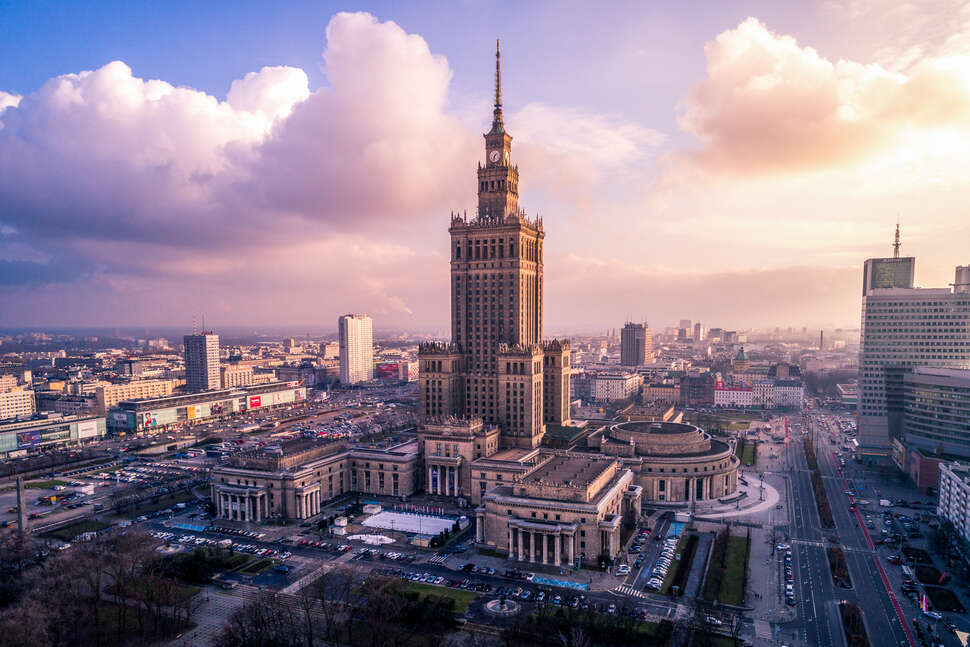
Yet, the ruler of repurposed structures is the Pałac Kultury I Nauki, or Palace of Culture, a château like structure in the careful focal point of the city. Initially a blessing from (and landmark to) Stalin, the structure has been changed to house two bars/innovative get-together center points Bar Studio and Kulturalna, a theater, seeing stage, and meeting space. Consider it a definitive social "up-yours" to the previous oppressors.
Warsaw is where you'll really feel invited
Possibly this is on the grounds that the city hasn't been overflowed with American sightseers (yet), yet for the most part guests are met with shock instead of the depleted carelessness you may involvement from local people at all the more profoundly dealt areas. English isn't actually omnipresent, however a great many people younger than 30 have a reasonable handle on the language, and are glad to utilize it. As usual, the key is to not be a dick - they're addressing you in their second language, so be tolerant and recognize that they're now going well beyond.
Warsaw is made for people-viewing. The zone around Plac Zbawiciela has a demeanor of Paris or Berlin, with a lot of in the open air bistros for talking, drinking, and keeping an eye on local people. Late business advancement has seen a series of bars, bistros, and joint zones grow up along the banks of the Vistula stream - and it's one of the main territories where open drinking is allowed. Stop by perpetual most loved BarKa, a bar inside a pontoon secured on the waterway, and bar/music scene Plac Zabaw ("Playground"), which has free outside shows. Łazienki Park is another mainstream pick for its late spring Chopin shows and meandering peacocks.
This is certainly not an incredible spot for health food nuts
For a customary nourishment experience, hit one of the city's milk bars (bar mleczny) - minimal effort cafeteria-style restaurants with plans passed on through ages. What they need in laces (no servers, washrooms, or bussers), they compensate for in heavenly eats. Be cautioned: Between singed potato flapjacks, meat-stuffed pierogi, beetroot soup (borscht), rose-jam doughnuts (paczki), and meat enveloped by cabbage leaves (galumpki), Polish sustenance packs it substantial. Well known spots incorporate Wegetariański Bar Mleczny, Prasowy, and Bar Bambino.
There are a lot of global choices however, as well. Center Eastern sustenance is mainstream, with Beirut, Falafel Bejrut, and Tel Aviv all serving veggie lover cordial admission. Sustenance lobbies have jumped up, as Hala Gwardii, situated in a previous boxing field with old fashioned blurbs as yet holding tight the dividers. Hala Koszyki focuses on top of the line merchants, and even has a day by day curated playlist. The Night Market (Nocny Market), situated in a previous train station in the Wola neighborhood, has turned into an end of the week top choice, the thin stages highlighting an always pivoting rundown of nearby nourishment sellers.
Encountering Polish bar culture is mandatory
All things considered, practically compulsory. In case you're pregnant, on anti-infection agents, driving, or carefully calm, nobody will pour liquor down your throat. Be that as it may, for every other person, liquor - especially vodka - goes about as high-proof social paste. About each event requires an uncommon toast and explicit assortment. Furthermore, it's (nearly) constantly flushed straight up.
There are incalculable varieties of vodka. For a definitive instructive encounter, stop by the Dom Wodki bar, which stocks 400 unique sorts from five landmasses. You can likewise roll the shakers and stop by Ulubiona, a little plunge bar which has the least expensive shots around the local area. In case you're feeling shy, request nalewka - the Polish word for organic product injected vodka - which is a milder and progressively lovely to taste. For mixed drinks, visit Woda Ognista - it's Warsaw's interpretation of the American speakeasy.
Craftsmanship and history run profound here
To deal with the Polish story, get thee to a historical center. There are 55 in Warsaw, and the vast majority of them have free days (or standard shoddy passage). For a brief training, begin with the Warsaw Uprising Museum, a display committed to the Polish opposition that secured the city for 63 days against Germany amid World War II, before it was at last vanquished. To get a feeling of the activity, you can watch Warsaw disintegrating in a chilling 3D video. At that point head to the POLIN Museum of the History of Polish Jews, a hypermodern building that houses a calming, intuitive take a gander at Jewish mistreatment amid World War II. At last, cross the Vistula stream to the refined Praga area to look at Soho Factory's Neon Museum, which is stuffed with Soviet-time signage.
Warsaw-based fashioners and craftsmen are frequently legitimately impacted by their history. Dish tu nie stał (The Lord Did Not Stand Here) adjusts and refreshes Communist structures into brilliant socks, shirts, and dresses. Mo Mularczyk of Momu utilizes her unpredictably weaved shirts to stand up to women's activist issues, including fairness, sexuality, and quality. Agata Kalinowska is a picture taker who reports eccentric life in a (still) preservationist society.
Comments
Post a Comment