In 1925 Berlin, a man approaches a hospitalized lady who evidently experiences retrograde amnesia. He plunks down next to her. "Do you recollect me?" he asks her.
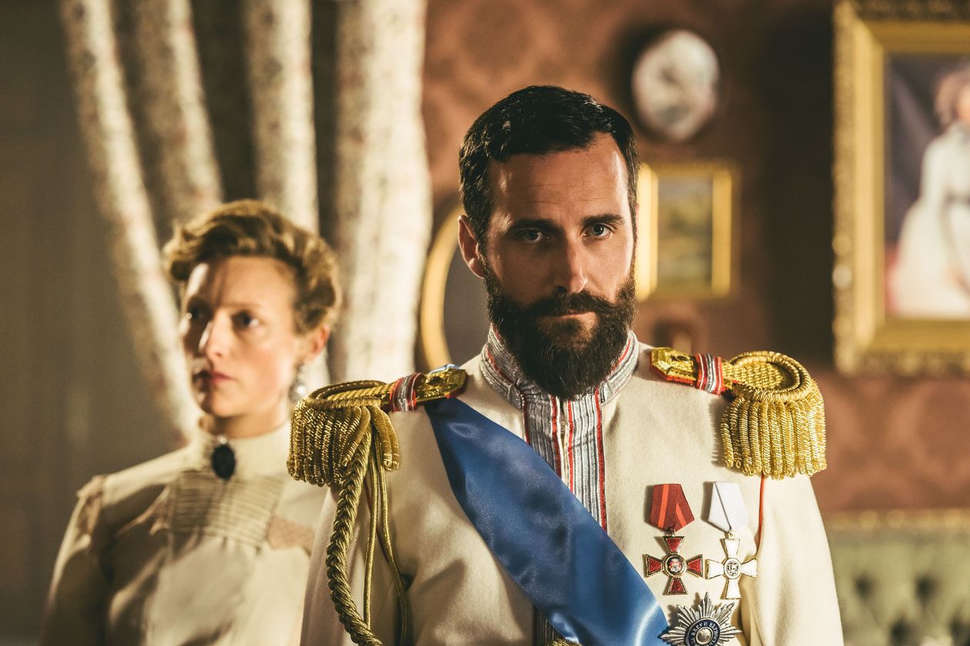
Memory is critical to Netflix's The Last Czars, a retaining docudrama about the finish of the Russian government and the beginning of the Russian unrest that as of late hit the spilling administration. The entrancing and defective Romanovs, Czar Nicholas II, and Czarina Alexandra Feodorovna, alongside their guide, the lastingly mythologized spiritualist Grigori Rasputin become the dominant focal point against this fantastic canvas. The show mixes luxurious dramatization (The Crown with increasingly blue-blooded British intonations) with talking heads of students of history giving setting on the legislative issues supporting these seismic chronicled occasions. However for all its lifted up desire, The Last Czars, made by a to a great extent British group and cast, including showrunner Hereward Pelling and executives Adrian McDowall and Gareth Tunley, works just in fits and spurts as chronicled record.
The show starts with the demise of Czar Alexander III, proceeds onward to Nicholas' marriage to Alexandra, and agendas progressively chronicled occasions in a 45-minute scene than most different arrangement can deal with over a season. That incorporates the Khodynka Tragedy, Bloody Sunday, the October Manifesto, the homicide of Rasputin, the February insurgency and Nicholas' surrender, at long last coming full circle in the appalling execution of the imperial family. The historical backdrop of the Romanovs gives not just a window into Russia's rise as a country state yet additionally how the nation thinks about its majestic history. A year ago, there were no formal state-supported occasions denoting the centennial of the homicides of the illustrious family in the nation. Just two decades sooner, a couple of years after their bodies were found and recognized, the previous President Boris Yeltsin had driven a luxurious state burial service in St. Petersburg for the last Czar and his family. Plainly, Russia's reproduction of its royal heritage is ready for investigating troublesome inquiries regarding social attachment and chronicled memory. Look no more distant than a years ago's disruptive Matthew Weiner Amazon treasury arrangement, The Romanoffs, following families who oddly guarantee to be relatives of Russia's last illustrious family.
It's no dishonor to The Last Czars that it can't do equity to these polarizing exchanges in the limited ability to focus six scenes. The legend of Nicholas, Alexandra, and Rasputin is rich to such an extent that it's nothing unexpected that political figures outside the Alexander Palace get the short stick, symbolizing just gloom and revolt on the show. Indeed, even a portion of the Romanovs don't move past their character sheets. Nicholas' uncle, Grand Duke Sergei Alexandrovich, is a brutish military man, inconsistent with the numerous verifiable accounts of a scholarly with differing abstract interests. His exchange winds up shorthand for his open job ever. At a certain point he barks, "These ridiculous radicals ought to be shot!" Most baffling is the show's utilization of the Anastasia 'riddle' as an encircling gadget. The account of Anna Anderson, the Polish sham who professed to be the most youthful little girl of the autocrat years after the death of the Romanov family, is overflowing with emotional potential. It, has little spot, be that as it may, in this chronicled account; the vivified highlight Anastasia exists for the individuals who really are enthralled by a progressively fantastical interchange rendition of Romanov history.
Strangely a portion of the show's best scenes, similar to the 1997 film, are the point at which it inclines toward the intensity of its visuals and goes for elaborate. Toward the second's end scene, the czarina incants, "Let not the fallen angel come over the deathbed of thy hireling," as the light-suffused consider of Rasputin ventures along with edge. A portion of the show's scenes are mixing, regardless of whether it is a shocking all encompassing perspective on individuals moving like ants towards the Winter Palace, ladies walking with rebellious countenances, or the stick drop quietness when Nicholas reports he will resign. The show feels truly immersing when it places us in the shoes of the Romanovs representing their failure to perceive how the tides of history have saturated their overlaid pens. The last two scenes specifically as Nicholas surrenders his illustrious title are grasping. Documentaries and motion pictures that pursue unmanageable verifiable figures walking towards predetermined endings have a mystifying bait about them.
the last dictators
The show's talking heads both improve and level. Periodically, sincere scenes are cleverly undermined by the students of history. Simon Montefiore, the LA Times British Book Award-winning writer whose tome The Romanovs 1613-1918 is one of the hotspots for the show, pithily notes during a delicate lovemaking scene among Nicholas and Alexandra, "They're one of the main imperial couples in Europe who offer a conjugal bed."
Infrequently the perspectives on students of history collide with what we see occurring on screen. After Nicholas ventures down as Czar, he welcomes somebody by saying, "Hi, I'm simply the medieval system." This mindfulness is inconsistent with the one sided leader the history specialists describe him as. Indeed, even Alexandra and Rasputin's relationship is both enhanced and undermined, making an odd dynamic. As antiquarian Pablo De Orellana contextualizes it as a mental relationship, what we see on screen particularly transgresses those limits. The show does well by Nicholas and Alexandra, played to extraordinary impact by Robert Jack and Susanna Herbert. Rasputin is a blended pack, in any case, regardless of whether Ben Cartwright's alluring exhibition does the truly difficult work. Fortunately, he isn't portrayed as a magnetic sociopath however the show battles to conquer any hindrance between the man and legend.
An odd decision on the show is its utilization of accents. "I can't communicate in Russian," Alexandra reveals to her sister who fixes her wedding cover in a faultless BBC English pronunciation, a similar one donned by every one of the Romanovs. As the show moves past the fall of the government, less characters utilize a fresh, luxurious emphasize, progressing to more characters talking with (awful) Russian intonations. Alexandra's distinction with the Russian individuals had a lot to do with xenophobia about her German causes and failure to communicate in Russian well, something the show calls attention to at an opportune time. However in an arrangement where each character communicates in English, language as a marker of distinction isn't satisfyingly delineated. In addition, there are errors and chronological errors even non-antiquarians like me can call attention to: For instance, a picture of the Red Square in 1905 demonstrates Lenin's catacomb, very nearly two decades before Lenin's passing.
The absence of Russian antiquarians adds to a demonstrate that feels expelled from its subject. In the primary scene, Sergei notes about the charge at Khodynka, "It is just a disaster on the off chance that you make it one." The hostility of historiography, particularly with Western history specialists' affinity to retroactively restore the Romanovs, could have been typified in a show with Russian information sources. As the credits played over the last scene of The Last Czars, the words "This arrangement depends on the occasions. A portion of the characters and circumstances have been changed for sensation purposes," flashed on screen. I winced. What's the purpose of a history exercise if the antiquarian isn't forthright about their very own predispositions?
Comments
Post a Comment